
Traveling for FFS in the US: How to Plan Your Surgery Trip
Publication date: 10/2026
- Traveling for FFS in the US: How to Plan Your Surgery Trip
- Most People Travel for Facial Feminization Surgery
- How to Choose an FFS Surgeon You Cannot Visit in Person
- Driving vs Flying In For Facial Feminization Surgery
- How Long to Plan to Stay After Surgery
- Why You Should Bring Someone to Travel with You
- Insurance and Costs When Your Surgeon Is Out of State
- Follow-Up Care After You Return Home
- Frequently Asked Questions
- Plan Your FFS Trip with Dr. Mittermiller
- Citations
Many patients who come to Dr. Paul Mittermiller for facial feminization surgery (FFS) don’t live near Los Angeles. Because specialized facial feminization surgery (FFS) specialists are concentrated in only a few regions of the country, the nearest experienced surgeon is often in another state. For patients coming from out-of-state it’s important to take time to properly plan the trip.
Dr. Mittermiller frequently performs facial feminization surgery on out-of-state patients at his practice in Los Angeles. This article explains how to evaluate a surgeon you cannot visit first, how long to plan to be away, who should travel with you, and how insurance works when your surgeon is in a different state. If you are at an earlier stage, read this guide for the general checklist that applies to every patient on how to prepare for facial feminization surgery.
Most People Travel for Facial Feminization Surgery
In a nationwide review of insurance claims for 1,735 patients who underwent gender-affirming surgery, the median distance traveled was 191 miles, and 36% of individuals left their state of residence for the procedure. Notably, in West Virginia, Wyoming, South Dakota, Mississippi, and Delaware, every patient in that sample left their home state for their procedure.1
Facial feminization shows greater geographic concentration than gender-affirming surgery overall. In national inpatient data covering 2015 through 2017, half of FFS procedures were performed in the Western United States, compared with 31.8% in the Northeast, 13.6% in the South, and 4.8% in the Midwest.2
Only 30.9% of U.S. counties (home to 65.1% of the population) are within a two-hour drive of a surgeon offering facial feminization according to researchers. That leaves roughly 1/3 of the population without a nearby option.3
Traveling is a common choice and we’ll cover how to plan your trip.
How to Choose an FFS Surgeon You Cannot Visit in Person
Dr. Mittermiller provides virtual consultation where he will go over your pre-op concerns, specific procedures and the recovery process. Dr. Mittermiller also performs simulations for many patients, which allows parts of the operation to be visualized in advance.
For patients who are unable to visit in-person for the consultation, the first in-person meeting often happens shortly before surgery.
Look at credentials and training when choosing surgeons. FFS involves reshaping facial bones, so look for a surgeon whose training covers that work directly. Dr. Mittermiller is a board-certified plastic surgeon with fellowship training in craniofacial surgery. Craniofacial surgery is the specialty that underlies the bony aspects of procedures like brow bone reduction and jaw feminization.
Look at their results. A surgeon’s before-and-after photo gallery is the most direct evidence available to you from a distance. Look for patients whose starting features resemble yours rather than focusing on the single most dramatic transformation. Make sure to compare the same angles across cases.
In your consultation, ask about how the office handles out-of-state patients: who you contact after hours, how follow-up works once you fly home, and what happens if a problem develops after you leave.
Driving vs Flying In For Facial Feminization Surgery
Driving. Patients from nearby counties (Orange County, San Diego, Ventura, etc) will often drive in. Patients from immediately neighboring states like Arizona and Nevada, will often drive in as well because of the flexibility. You can head home sooner if you recover faster than expected and come back for the post-op appointment without booking flights.
Flying. Patients from the Northeast, the Midwest, Alaska, Hawaii, and other regions without local options typically will choose to fly in. If you do fly in, you will want to commit to a longer stay in LA because you would want to stay through your first postoperative visit before getting on a plane back.
Patients who fly in usually head home a few days after their first post-op visit, once Dr. Mittermiller has checked their incisions and healing. Any trip longer than 4 hours, whether by air, carries some risk of blood clots. Especially when a patient has had surgery within the past 3 months.4
Here are a few habits to help alleviate the risk of blood clots. Move your legs and flex your calf muscles often during the trip. For those driving in, make sure to stop regularly to get out and walk around. Ask your surgeon whether graduated compression stockings make sense for you. Make sure to keep your medications and ice packs in your carry-on so you are comfortable and have access to them.
How Long to Plan to Stay After Surgery
Dr. Mittermiller asks local patients to take at least 1-2 weeks off work, and for patients who are flying in from out-of-town to take 2 weeks off, potentially longer. Two weeks gives you time to settle into your lodging before surgery and a few days after your first postoperative appointment to get ready for the trip home.
Swelling generally peaks in the first week. Forehead swelling tends to be modest, while chin and jaw work can cause significant swelling that peaks at 3 to 7 days and settles over months. Sutures and staples are removed in the post-op visit which is around 1-2 weeks.
The simplest plan is to stay near the office through that visit and fly home afterward. If that is longer than you can be away, raise it with the surgical office early: ask whether sutures can be removed closer to home, or whether a second short trip would be needed instead. Settle this before you book flights rather than after surgery.
Patients considering more than one stage of surgery should remember that a staged approach typically means more than one trip.
Where to Stay While You Recover
Choose accommodation close to the surgical practice rather than the airport, so that a follow-up visit or an unscheduled check is just a short trip and not long drive. If you are not on the 1st floor of a hotel or accommodation, make sure it has an elevator. Going up the stairs will be difficult in the first days after surgery. Make sure you have easy access to food, because you will not be cooking.
Pack for recovery. Dr. Mittermiller maintains a list of postoperative supplies patients commonly want on hand, and it is easier to bring those items than to find them in an unfamiliar city after surgery.
Why You Should Bring Someone to Travel with You
Dr. Mittermiller prefers that traveling patients bring a friend or family member. Pain usually peaks and swelling builds the first few days after surgery. You would want someone to help with managing your hotel room and handling meals and medication timing if possible. It’s especially important for people who are away from home.
Having a support person who can help you with short walks can reduce swelling and the risk of blood clots. They are also an extra pair of eyes who can notice if something doesn’t seem right and call the office.
Post-surgery care at home is also one of the practical barriers patients report most often when they travel for gender-affirming surgery, alongside long travel distances and out-of-pocket costs.5
Take the time early on to decide who is coming with you, and coordinate their time off and travel arrangements.
The first several days after surgery are the most important time, so if your support person has limited time off, choose to have them with you for the initial days. If it’s difficult for you to arrange a support person, talk with Dr. Mittermiller’s team so it can be planned for before your surgery date.
Insurance and Costs When Your Surgeon Is Out of State
Traveling across state lines can affect your coverage, so make sure to ask your insurance company beforehand.
Questions to ask your insurance company:
Is this surgeon in network for your plan, and if not, what are the out-of-network terms?
Will your plan consider a single-case agreement if no in-network surgeon in your state performs the procedure?
What documentation does the plan require, and how long does review usually take?
What costs are outside the surgical quote?
Some organizations help with travel itself. Elevated Access, for example, helps eligible patients access free flights for gender-affirming healthcare.
Dr. Mittermiller’s office has experience working with insurers on coverage for these procedures, and he has written separately about insurance coverage of FFS and about weighing insurance against self-pay. The practice’s financing information covers the self-pay side.
Follow-Up Care After You Return Home
Serious complications after FFS are rare. A systematic review of facial feminization patients undergoing genioplasty reported a complication rate of 0.55% and a revision rate of 2.67%, with high patient satisfaction across the studies reviewed.6
Distance does change how post-op care is managed, so make sure to go over these with your surgical team before heading home:
How to contact the office, including after-hours emergencies?
Whether follow-up check-ins can be done by video, and how to submit photos?
Which symptoms require going to a local urgent care rather than sending a routine message?
Whether you should establish a local physician before you travel, in case you need in-person care?
Frequently Asked Questions
How long should I stay near my surgeon after FFS?
Most patients who fly in stay through their first postoperative visit, which happens 1 to 2 weeks after surgery. Dr. Mittermiller checks your healing at that visit, which is why patients flying in should plan for at least 2 weeks in Los Angeles.
Do I need to come to Los Angeles for my consultation?
No. Dr. Mittermiller offers virtual consultations, so out-of-state patients can review their goals and surgical plan before booking any travel. If possible, Dr. Mittermiller always prefers an in-person consultation since this allows him to best evaluate each patient’s goals and facial structure.
Plan Your FFS Trip with Dr. Mittermiller
If you live in a state without an FFS surgeon nearby, contact Dr. Mittermiller’s office to arrange a virtual consultation. Dr. Mittermiller and his team will review your appearance goals, outline the surgical plan and walk you through the schedule.
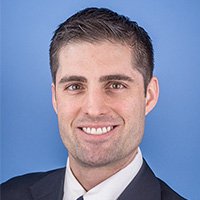
Dr. Mittermiller is a plastic surgeon with specialty training in craniofacial surgery and facial feminization surgery. His office is located in Los Angeles, California.
Contact us today to schedule a consultation.
Citations
- Johnstone T, Thawanyarat K, Eggert GR, Navarro Y, Rowley MA, Lane M, Darrach H, Nazerali R, Morrison SD (2023) Travel distance and national access to gender-affirming surgery. Surgery 174 (6):1376–1383. doi:10.1016/j.surg.2023.09.008 https://www.ncbi.nlm.nih.gov/pubmed/37839968
- Hauc SC, Mateja KL, Long AS, Glahn JZ, Acuna Higaki AR, Rivera JC, Ihnat JMH, Mukherjee T, Oh SJ, Michael Alperovich (2022) Limited Access to Facial Feminization Geographically Despite Nationwide Expansion of Other Gender-Affirming Surgeries. Plastic and Reconstructive Surgery Global Open 10 (9):e4521. doi:10.1097/GOX.0000000000004521 https://www.ncbi.nlm.nih.gov/pubmed/36148027
- Febre-Alemany DA, Ihnat J, Flores-Perez PS, Vassallo M, Hauc SC, Allam O, Bach K, Alperovich M (2026) Impact of State Legislation on Regional Availability of Gender-Affirming Surgeons in the United States. Annals of Plastic Surgery 97 (5):583–588. doi:10.1097/SAP.0000000000004834 https://www.ncbi.nlm.nih.gov/pubmed/42684910
- Understanding Your Risk for Blood Clots with Travel. (2024) CDC. https://www.cdc.gov/blood-clots/risk-factors/travel.html. 2026
- Boyer TL, Wolfe HL, Littman AJ, Shipherd JC, Kauth MR, Blosnich JR (2023) Patient Experiences and Provider Perspectives on Accessing Gender-Affirming Surgical Services in the Veterans Health Administration. Journal of General Internal Medicine 38 (16):3549–3557. doi:10.1007/s11606-023-08389-9 https://www.ncbi.nlm.nih.gov/pubmed/37670068
- Gursky AK, Chinta SR, Wyatt HP, Belisario MN, Shah AR, Kantar RS, Rodriguez ED (2024) A Comprehensive Analysis of Genioplasty in Facial Feminization Surgery: A Systematic Review and Institutional Cohort Study. Journal of Clinical Medicine 14 (1). doi:10.3390/jcm14010182 https://www.ncbi.nlm.nih.gov/pubmed/39797264