
Postoperative Supplies for Gender-Affirming Surgery
Dr. Mittermiller has compiled a list of supplies that patients may want or need after gender-affirming surgery. The surgeries of focus for this page are primarily facial feminization surgery (FFS) and breast augmentation surgery.
The brands are not important as the concept behind each product. Please let Dr. Mittermiller know if you find any products that are better than the ones listed below or if there are other vendors that provide a better experience. This is a new project, so we would like to compile the best list for all patients.
- Ointments for Wound Healing
- Silicone Gel and Silicone Sheets for Scar Management
- Pillows for Head Elevation
- Jaw Compression Garments
- Nutritional supplements
- Post-Surgical Bras
- Managing Corrective Lenses after FFS
- Top Surgery Nipple-Areola Graft Healing
- Masculinizing Top Surgery Compression Garments
- Sleep Apnea Devices
Ointments for Wound Healing
Immediately after surgery, it is often helpful to apply ointments to the incisions to improve wound healing. This is frequently performed on incisions that are visible and are not covered with skin glue. This commonly includes the hairline incision for a hairline lowering or lip lift incision. The ointment should be applied while the stitches are still in place and can be discontinued once there is no longer scabbing at the surgical site. There are multiple options for ointments, but the ones listed below are a few commonly used products.
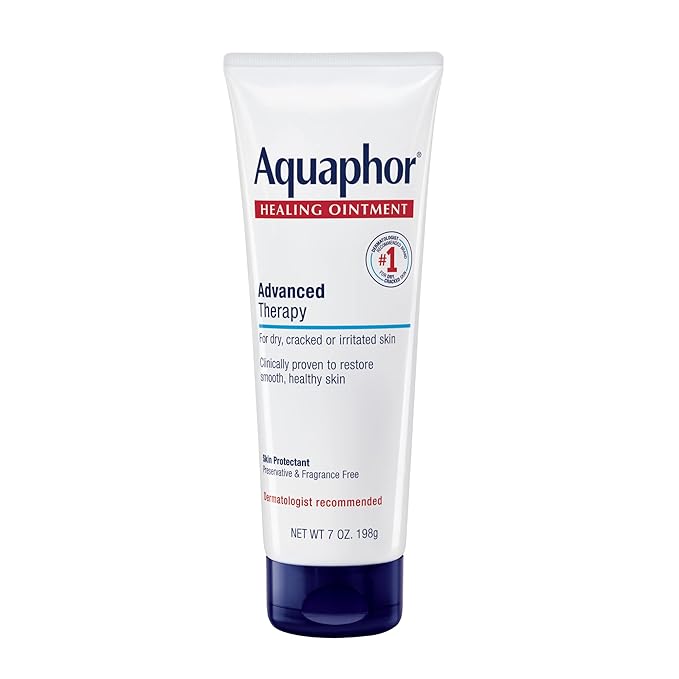
Aquaphor – Home Size
https://amzn.to/3Eby6xQ
Aquaphor provides a barrier over a fresh incision. This barrier allows for improved healing of the incision. Dr. Mittermiller is generally okay with gentle cleaning of all fresh incisions followed by application of a thin layer of Aquaphor ointment. This is commmonly used for hairline lowering incisions and lip lift incisions.
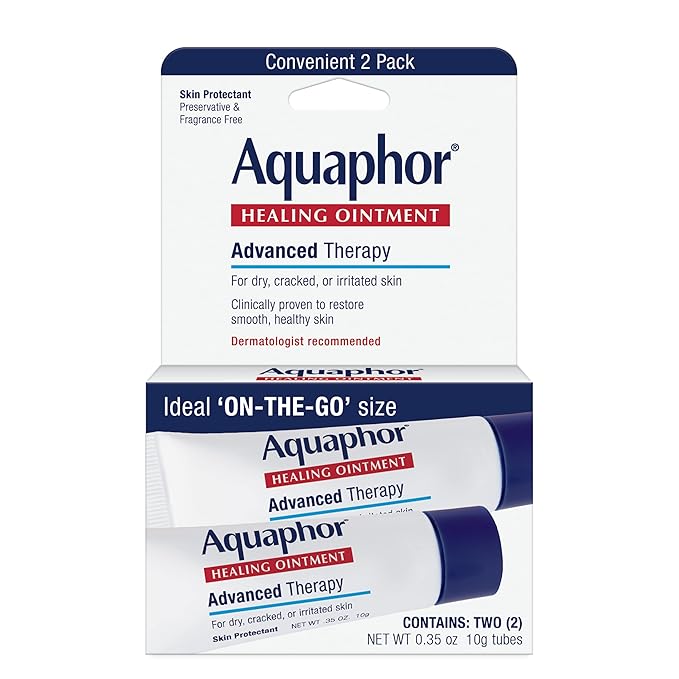
Aquaphor – Travel Size
https://amzn.to/4hyGSo4
This is the same product as the one listed above, but it is in small containers to allow for ease of travel. It is often recommended to apply this to any fresh incisions three times daily. Having small tubes of Aquaphor can be helpful for people when they are away from home.
Silicone Gel and Silicone Sheets for Scar Management
Once the incisions no longer have any areas with open wounds, Dr. Mittermiller prefers patients switch to either silicone gel or silicone sheets for scar management. Silicone sheeting is preferred, but there are certain incisions, such as a hairline incision or lip lift incision that do not easily allow for sheet placement. In these areas, silicone gel can be more useful.
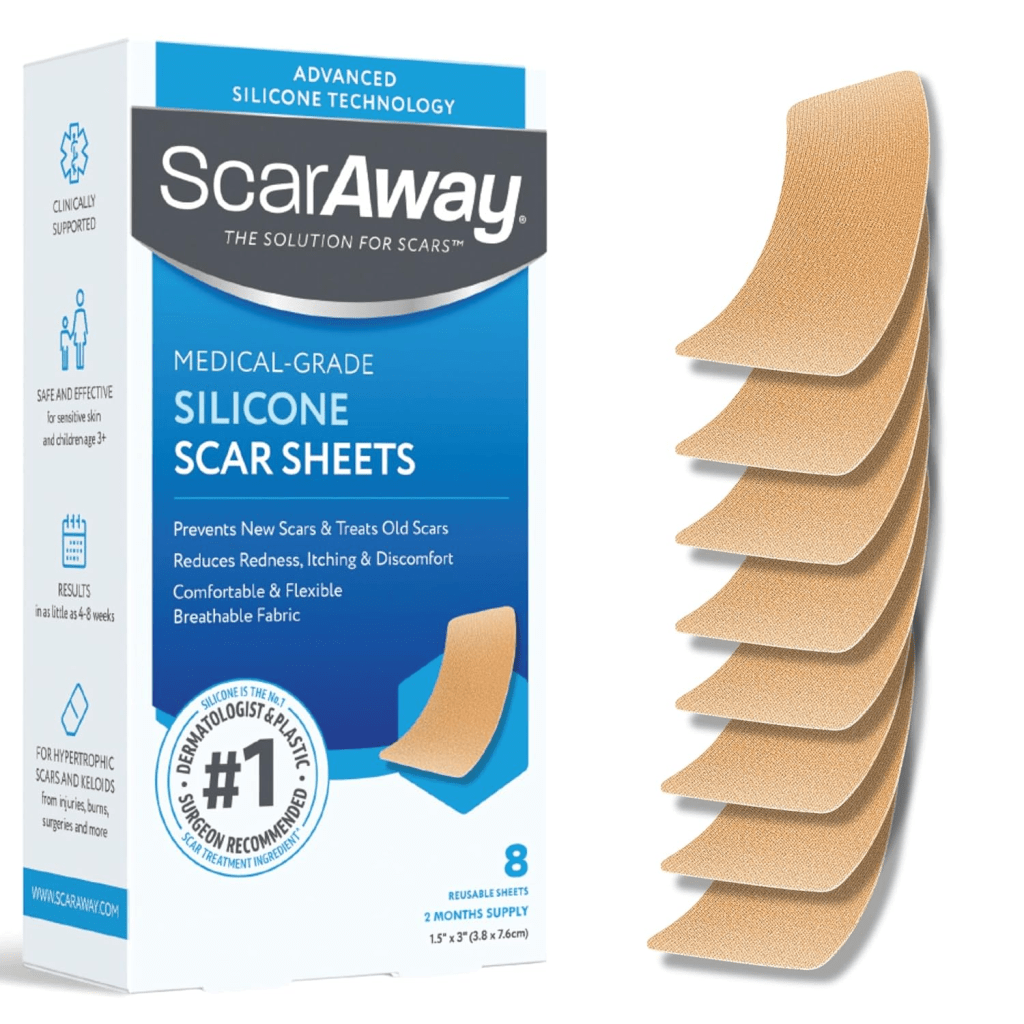
Scar Away Silicone Sheets – Short
https://amzn.to/3VcmhgK
These silicone sheets have a layer of fabric that also can serve as sun protection. The size is 1.5″ x 3″, which should work well to cover breast augmentation incisions that are placed in the inframammary fold (IMF) location.
The silicone sheets create an environment that prevents the skin/scars from becoming too dry while also provide gentle offloading of tension. The sheets can be washed with soap and water, allowed to dry, and reused. The strips should be thrown away when they start losing areas of silicone, become too dirty to reuse, or experience separation between the silicone and fabric layers.

Scar Away Silicone Sheets – Long
https://amzn.to/4htGBTh
These silicone sheets are longer than the ones listed above. They provide the same benefit of having a thin silicone layer adherent to the skin with a fabric layer to prevent sticking to clothing. The size is 1.5″ x 7″, which should work well to cover masculinizing top surgery incisional scars.
The packaging says the product is for C-sections, but the product is perfectly applicable for covering scars in other parts of the body. Other than the size, the product does not have any components that are specifically designed for a c-section scar versus other scars.

NewGel+UV – Silicone Scar Gel + SPF 30
https://amzn.to/3MEu3Pe
This gel is also a combination of silicone and sunscreen. This is helpful for hairline lowering scars and lip lift scars, where silicone strips are difficult to place.
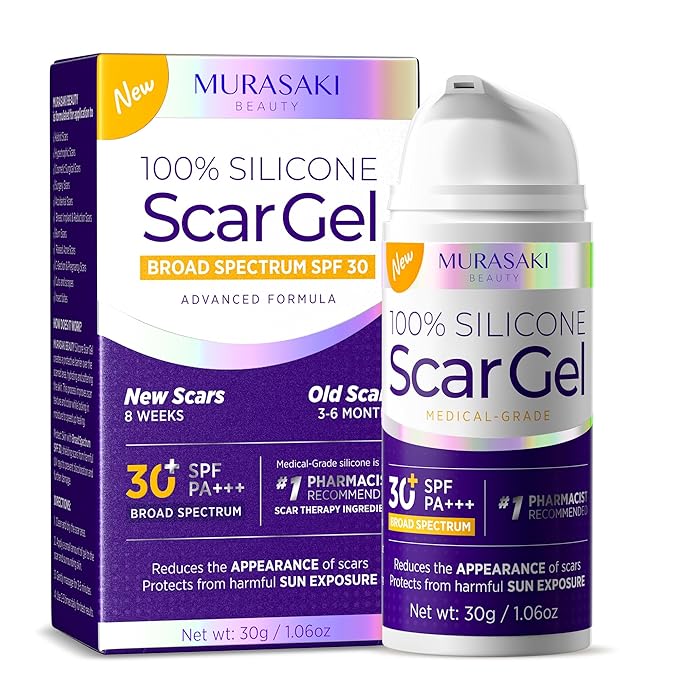
Murasaki – Silicone Scar Gel with SPF 30
https://amzn.to/4tMsZte
This gel is a combination of silicone and sunscreen. This is helpful for hairline lowering scars and lip lift scars, where silicone strips are difficult to place.

Skiennix – SPF-30 Silicone Gel
https://amzn.to/4iaN06F
This gel is a combination of silicone and sunscreen. The brand is not particularly well-known, but it has basic ingredients (silicone and zinc) and should be effective. This is helpful for hairline lowering scars and lip lift scars.
This product is sometimes out of stock. If so, please see products below.

BioCorneum Scar Gel
https://amzn.to/3KzMekB
This gel is a combination of silicone and sunscreen. It is produced by one of the major breast implant companies. The product has a high price, but it is considered the gold standard product that combines silicone scar gel and sunscreen. This is helpful for hairline lowering scars and lip lift scars.
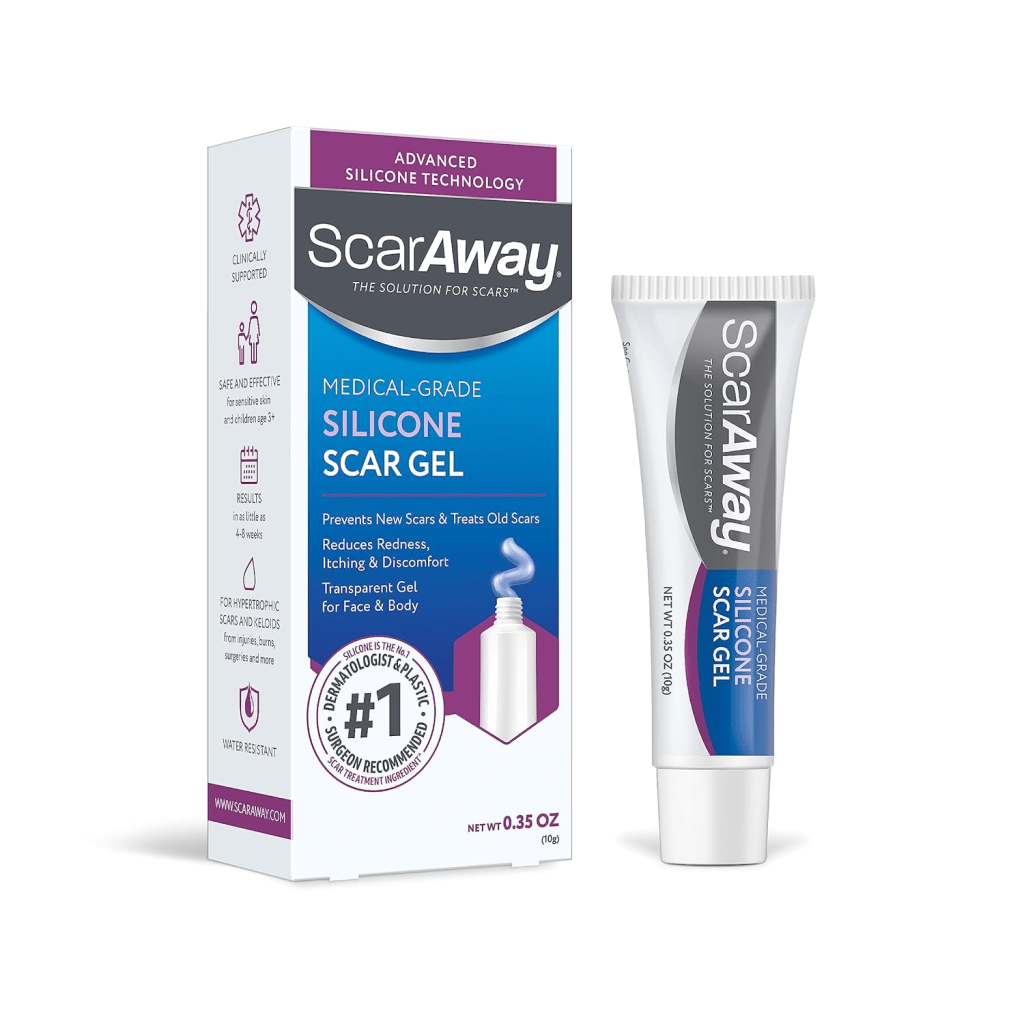
Scar Away Silicone Gel
https://amzn.to/4bNmjRO
This silicone gel is basic and doesn’t contain any fancy or controversial ingredients. The price is reasonable and the purity seems appropriate. It should be combined with sunscreen for maximal scar protection. This is useful for hairline lowering scars and lip lift scars.
Pillows for Head Elevation
After gender-affirming facial surgery (FFS or FMS), it is helpful to keep the head elevated as much as possible in an effort to reduce swelling and pain. One method to do this while sleeping is to simply create a ramp out of pillows that goes underneath the back and head. Another method is to use a wedge pillow. There are many types and brands of wedge pillows. The most helpful for reducing swelling is to have a wedge pillow that elevates the head as much as possible.

Wedge Pillow for Head Elevation
https://amzn.to/3Kgb8VX
This wedge pillow is reasonably priced and allows for maximal elevation of the head while sleeping.
Jaw Compression Garments
These are useful for patients undergoing submental liposuction to wear for a longer period of time. Dr. Mittermiller usually uses ACE bandages, but these can become cumbersome after 1-2 weeks of wear. The compression garment can be more comfortable and fashionable to wear for a longer period of time.
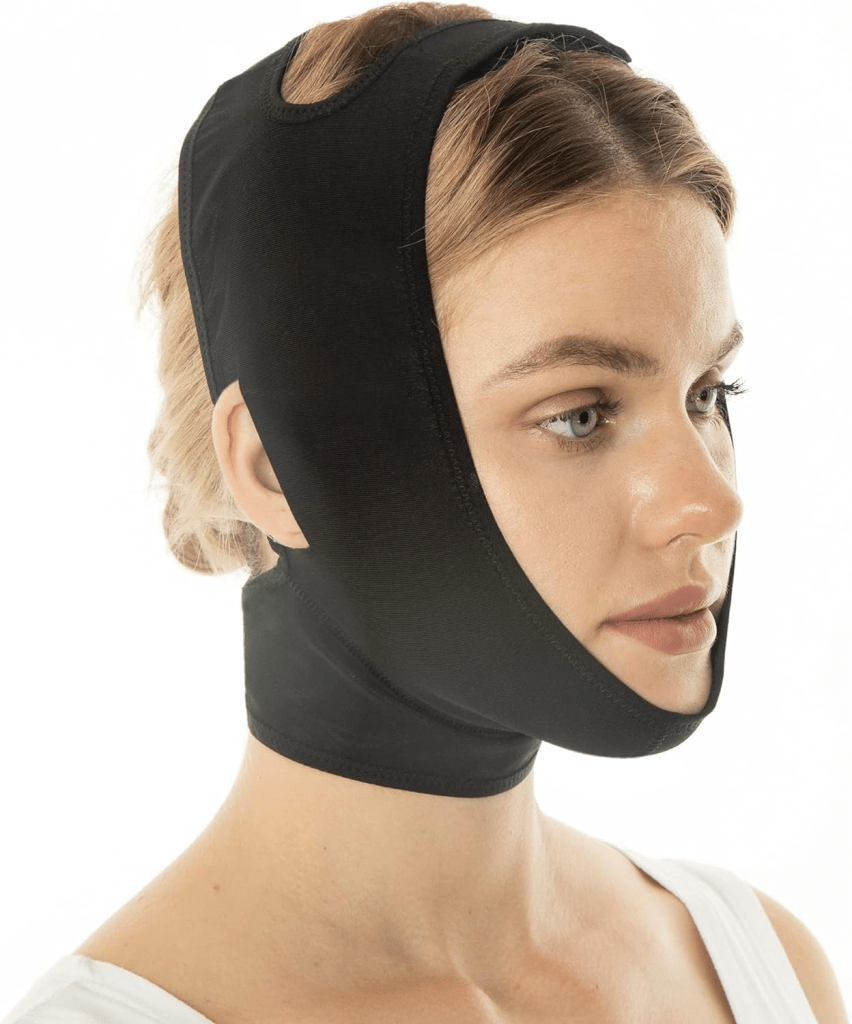
Jaw Compression Garment
https://amzn.to/44WBsOz
This jaw compression garment has three velcro straps that allow you to adjust the degree of compression around the chin and around the neck. If one of these areas does not have the correct pressure, it can either be very uncomfortable or ineffective.
Nutritional supplements
After undergoing jaw contouring surgery, the chewing muscles can be sore for a few weeks. In this scenario, people may have a difficult time consuming enough calories and may wish to supplement their diet with nutritional drinks. Boost creates a variety of products that are safe and nutritious following surgery. Some surgeons request that patients stick to only a liquid diet for a period of time after surgery. It is important to discuss the individual requirements or recommendations with your surgeon taking into account your surgical plan.

Boost Nutritional Products
https://amzn.to/4ejom15
This link will take you to a page with multiple options for Boost products. The “Original Liquid Drinks” may be the easiest for some people since it comes pre-mixed and in a variety of flavors. The link to one option for the liquid drink is below.

Boost High Protein with Fiber Nutritional Drink
https://amzn.to/3zd11iP
Boost makes multiple liquid drinks that are offered in several flavors and contain varying levels of fiber and protein. Since the duration during which you will want liquid drinks is relatively short, the exact choice is less critical than simply having a nutritious liquid option. Some people will purchase a couple of different flavors to find their favorite option.

Ensure Nutritional Supplements
https://amzn.to/4cWFx7H
Ensure also makes multiple drinks that can be useful to have for after surgery. This link will take you to the Ensure page where the multiple options can be explored.
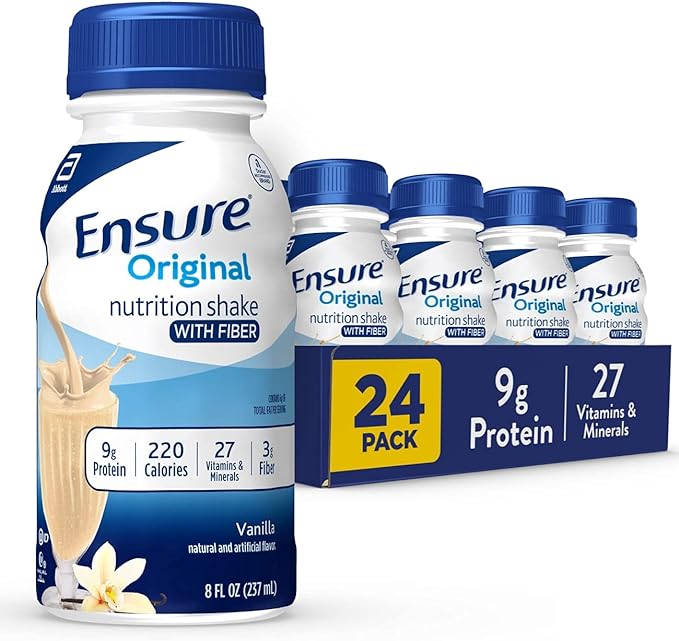
Ensure Original Nutritional Shake
https://amzn.to/4dSOlwL
There are many options to choose from when deciding on a nutritional liquid supplement for after surgery. This link will take you to one of their standard drinks with a standard flavor.
Post-Surgical Bras
After breast augmentation surgery, it is important to wear a supportive bra that will hold the implants in their appropriate positions while the skin and soft tissues heal and produce helpful scar tissue. The areas of focus for postoperative bras revolve around multiple items. If an inframammary incision is used, the bra should not have an underwire since this can apply excess pressure on the incision. If the bra is going to be applied at the time of surgery, it is helpful to have clasps in front and over the shoulders. This allows for easy placement within the operating room. Some surgical bras also come with a compression strap over the top of the breasts. This strap can be helpful when trying to push the implants downward and cause increased lower pole expansion. Ideally you should have this bra available prior to surgery so that it can be placed at the time of surgery.
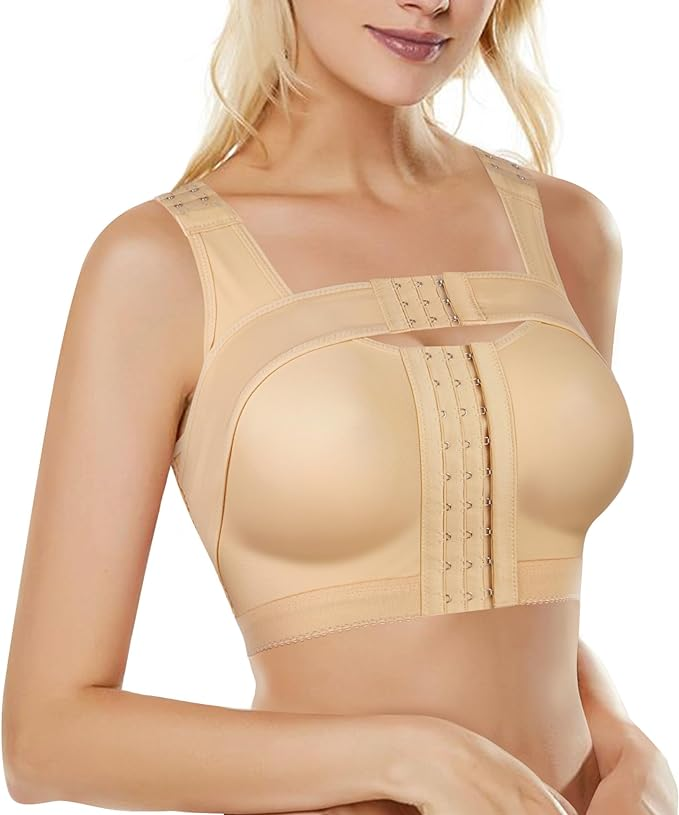
Surgical bra with upper pole compression strap https://amzn.to/4dVHTFQ
This surgical bra has a built-in strap that goes above the breasts. If necessary, this can be used to prevent the implants from riding higher on the chest. If the strap is not needed, it can be cut off.
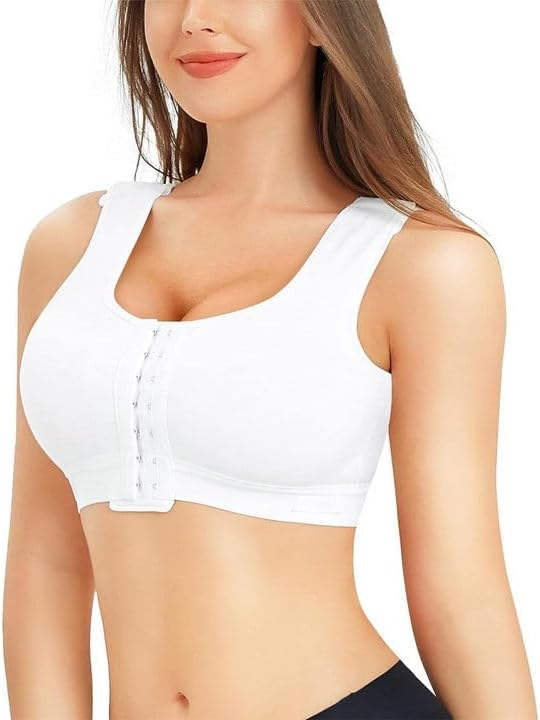
Surgical bra without upper pole compression strap https://amzn.to/44XnAnc
This is the same brand of bra as the one listed above but it does not have the upper pole compression strap.

Post-surgical bra with different shoulder clasp mechanism https://amzn.to/4bsMSvV
This is the same brand of bra as the one listed above but it does not have the upper pole compression strap.
Managing Corrective Lenses after FFS
It can often be challenging for patients to wear glasses after FFS. Many patients have large head bandages immediately following FFS. The glasses then simply do not fit either over or underneath the bandages. In these scenarios, it can often be best to simply switch to contact lenses. Contact lenses can be challenging to place if there is significant swelling of the eyelids. However, if there is eyelid swelling, this usually only lasts for a few days.
If contact lenses are not an option, there may be additional options to try to continue wearing eyeglasses. The problem with traditional glasses is that they can place excess pressure on the nose. This is problematic for patients who have undergone a rhinoplasty.
One simple method to prevent pressure from the nose pads on the nose is to elevate the glasses and tape the bridge of the glasses to the forehead. The tape below provide a good adhesive while not being too damaging to the skin

Medical Tape
https://amzn.to/4jG7k0p
This porous medical tape can be used to secure the glasses bridge to the forehead to offload pressure on the nasal bones.

3M Sensitive Skin Medical Tape
https://amzn.to/3MY6IIi
This medical tape is gentle on the skin and can be used to secure the bridge of the glasses to the forehead to offload pressure on the nasal bones.
Although they can appear silly, one can consider a forehead band that holds the glasses. One example is shown below.

Eyeglasses Holder
https://amzn.to/40XFgi5
This headband can be used to hold the bridge of the glasses to prevent pressure on the nose. This device is not ideal because the band often slides around.
Another option is to wear a silicone pad over the nose after the operative nasal splint is removed. One option is shown below. These silicone pads still place some pressure on the nose, so they may not be ideal. It is best to discuss this option with your surgeon before purchasing the device.

RhinoShield
Link to RhinoShield
This is one example of a narrow silicone pad that can be placed over the nose to protect the nose while wearing glasses. This is not ideal because it still places pressure on the nose and the pads are rather expensive.
There are some devices that help offload pressure on the nasal bridge and instead place pressure on the cheeks. These can work for some patients, but they are not be ideal for patients who have undergone cheek augmentation with implants or fat grafting since the pressure can either cause pain (with implants or fat grafting) or result in fat absorption (with fat grafting).
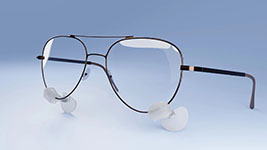
Cheek Risers for Glasses
Link to Etsy Product
This is one example of a narrow silicone pad that can be placed over the nose to protect the nose while wearing glasses. This is not ideal because it still places pressure on the nose and the pads are rather expensive.
Top Surgery Nipple-Areola Graft Healing
During double-incision top surgery with free nipple grafts, the nipple-areola complexes are sewn into new locations during surgery. There are frequently issues with wound healing following this type of procedure. It is important to cover the grafts for a period of time that prevents them from adhering to clothing or bandages. The products below are useful adjuncts to use with nipple-areola grafts until they have completely healed.
Adaptic, Xeroform, and Telfa are different types of non-adherent bandages. You do not need all of these. Some people prefer one product over the other for various reasons. All wound-care specifics should be discussed with the surgeon, but commonly these products are combined with Neosporin, Bacitracin ointment, Vaseline, or Aquaphor to prevent adherence to the nipple-areola grafts.

Adaptic
https://amzn.to/3EuVJSh
Adaptic is a non-adherent dressing that protects the grafts while allowing fluid to flow through the gaps in the material. This has no color and rarely sticks to the grafts when applied appropriately.

Xeroform
https://amzn.to/3QuuIRL
Xeroform is a non-stick bandage that is commonly used for skin grafts. It is similar to Adaptic but slightly stickier and can leave a yellow residue.

Telfa
https://amzn.to/4htw76D
Telfa is another type of non-stick bandage. Unlike Adaptic and Xeroform, it does not have a petroleum-based material combined with it, so it must have another ointment added during the early stages of healing to prevent sticking to the grafts. It does not leave any colored residue.
Masculinizing Top Surgery Compression Garments
Surgeons will often place patients into a compression outfit following masculinizing top surgery. This helps prevent the collection of fluid at the surgical site. Some surgeons prefer to use stretchy bandages while others prefer actual garments. The items below allow for online purchase of the garment. It should be purchased in advance to confirm correct sizing.
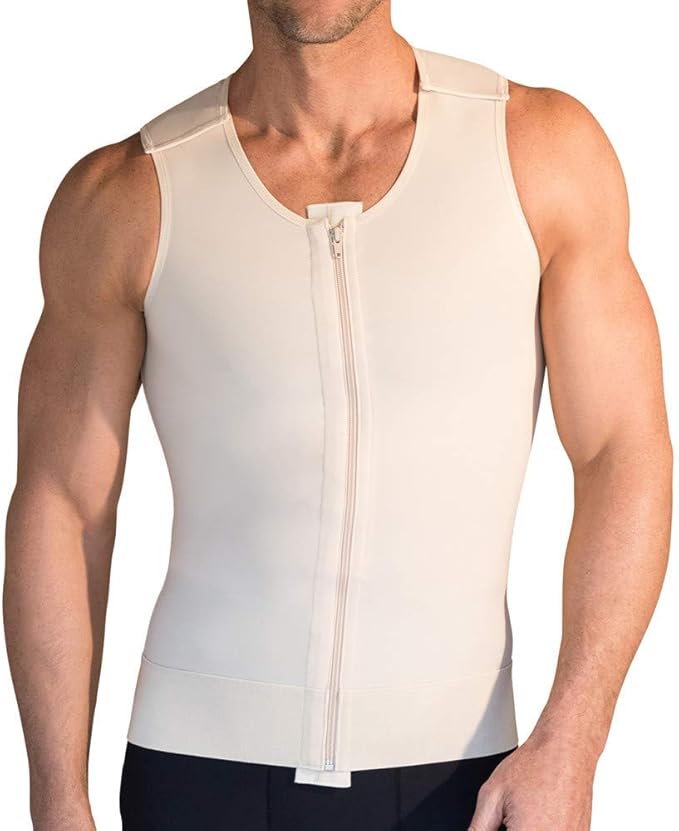
Masculine chest compression garment – Marena
https://amzn.to/3By4jOW
The garment shown here would work well for a patient undergoing masculinizing top surgery. The primary components to include are a closing device on the front of the garment in addition to closing devices for the shoulder straps. These are essential to allow the surgeon to place the garment at the time of surgery. The garment should be sized so that it is snug but not so tight that it is uncomfortable. It is critical to try the garment prior to surgery to confirm fit.

Masculine chest compression garment – ContourMD
https://amzn.to/4j3TuVA
This garment also works for patients undergoing masculinizing top surgery. As mentioned previously, the garment should be sized so that it is snug but not too tight that it is uncomfortable. It is critical to try the garment prior to surgery to confirm fit.

Masculine chest compression garment – LipoElastic
https://amzn.to/4a8H0Ih
This garment would work for a patient undergoing masculinizing top surgery. The length of the garment is a little short, so it may not be ideal for all patients.
Sleep Apnea Devices
Recovery from FFS that includes either a brow bone setback or rhinoplasty can make it challenging for patients with sleep apnea.
For rhinoplasty, the problem with traditional CPAP or BiPAP devices is that they often place excessive pressure on the nose. This is problematic during the postoperative healing phase of a rhinoplasty. One option for patients undergoing only a rhinoplasty is to use a full face mask. This should be discussed preoperatively with the surgeon and the patient’s sleep apnea specalist.
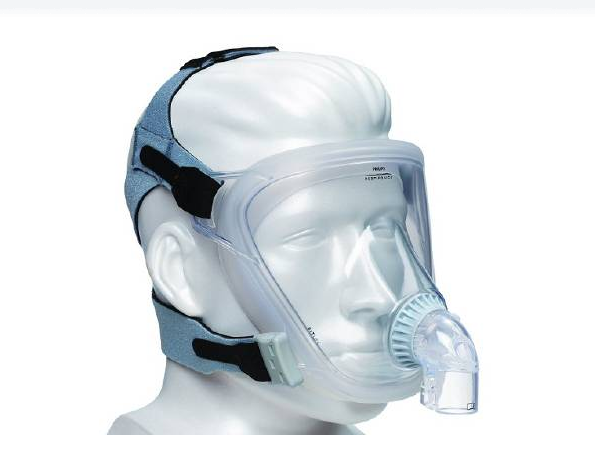
Full face mask
Link to Apria
This is an example device that could be used for a patient undergoing rhinoplasty who uses a CPAP or BiPAP device. This would need to be discussed with one’s surgeon and sleep apnea specialist preoperatively.
For brow bone setback, the problem with CPAP or BiPAP is the positive pressure. The positive pressure can theoretically push air through the cuts in the frontal sinus bone that were made during the operation. In these scenarios, Dr. Mittermiller recommends close discussion with the surgeon and with the sleep apnea specialist. It may be necessary to consider alternative sleep apnea devices such as the myTAP.

myTAP device
Link to Apria
This device can be used after FFS to avoid pressure on the nose after a rhinoplasty and positive pressure into the sinuses after a brow bone setback. This would need to be discussed with one’s surgeon and sleep apnea specialist preoperatively.

Dr. Mittermiller is a plastic surgeon with specialty training in craniofacial surgery and facial feminization surgery. His office is located in Los Angeles, California.
Contact us today to schedule a consultation.
Dr. Mittermiller is trialing a relationship with Amazon as an Amazon Affiliate. He has curated these items based on the desired products for the experience and based off patient reviews of the products.